
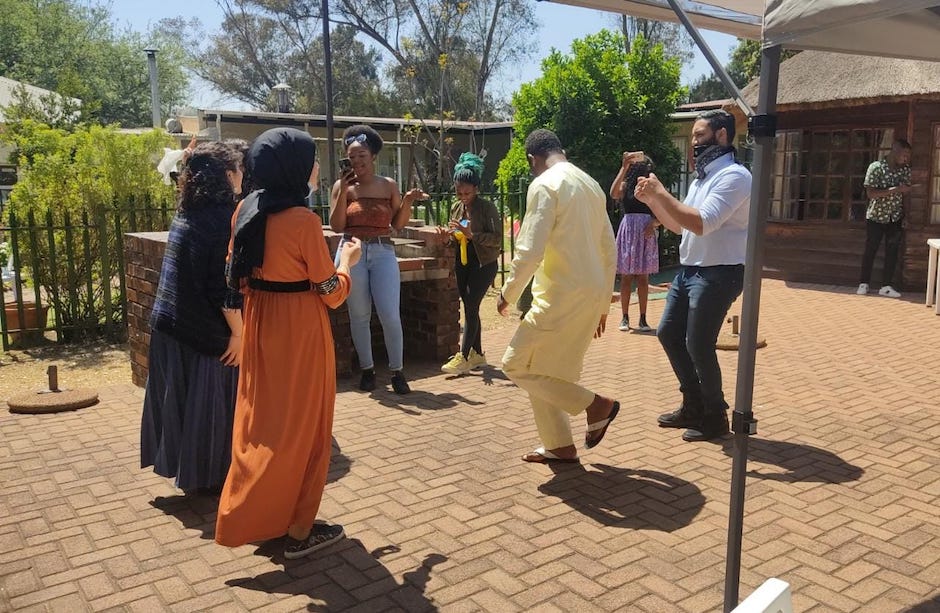
Most students arrive in South Africa thinking they are here to improve their English.
They leave having learnt far more than grammar.
Language becomes the entry point, not the outcome. Culture fills in the gaps. Conversations stretch. Assumptions shift. Confidence grows in ways no textbook can teach.
This is what happens when learning moves beyond the classroom and into real life.
Language Starts Making Sense When People Enter the Picture
South Africa is not a single story. It is layered, complex, and deeply human. That is what students feel first.
English is spoken across cultures, communities, and generations. Students quickly realise that fluency here is not about sounding perfect. It is about listening carefully, responding thoughtfully, and learning how people actually communicate.
A conversation with a taxi driver.
A chat at a local café.
A shared joke with a shop assistant.
These moments sharpen listening skills, build confidence, and teach students how English adapts to context, tone, and personality.
Learning History by Standing Inside It
South Africa’s past is not hidden away. It is present in streets, buildings, museums, and conversations.
A visit to the Cradle of Humankind reframes how students think about humanity itself. Standing where some of the world’s oldest human fossils were discovered has a grounding effect. It puts language, nationality, and difference into perspective.
Places like the Apartheid Museum and Constitution Hill offer something equally powerful. They show how language has been used to divide, control, protest, and ultimately reconcile.
Students do not just learn vocabulary here. They learn how words shape societies.
Cultural Encounters That Stay With You
Meeting people matters more than observing displays.
Cultural villages, township visits, and community-led experiences offer students insight into everyday South African life when done respectfully and thoughtfully. These are not performances. They are exchanges.
In Soweto, students hear stories that rarely appear in guidebooks.
In coastal communities like Kalk Bay, food becomes a lesson in tradition, sustainability, and shared heritage.
In rural areas, students encounter elders who pass down history through stories rather than textbooks.
English becomes the bridge that allows these moments to happen.
Understanding a Country That Chooses to Move Forward
South Africa’s history includes deep pain, conflict, and injustice. Students do not shy away from this. They engage with it.
Sites like Robben Island leave a lasting impression. What was once a place of isolation is now a space of reflection, dialogue, and hope.
Students often speak about how these experiences change their understanding of resilience, leadership, and forgiveness. These lessons quietly follow them home.
Why This Matters for Language Learning
When students feel connected, language stops feeling academic.
They speak more freely.
They listen more carefully.
They take risks with confidence.
Cultural exposure gives meaning to grammar. It gives context to vocabulary. It turns English into a living tool rather than a classroom subject.
This is why learning in South Africa feels different.
Learning English Here Is About More Than English
At English Access Gauteng, students are not just learning a language. They are learning how to move through unfamiliar spaces with curiosity and respect.
They leave with stronger English skills, yes.
But they also leave with sharper awareness, broader perspectives, and stories that shape how they see the world.
That kind of learning stays with you.