
Learning English does not usually fail because people are lazy or incapable. It fails because the learning feels disconnected from real life. Grammar rules are memorised, vocabulary lists are saved, and then none of it shows up when someone actually needs to speak.
The good news is that progress does not require more hours, expensive apps, or dramatic changes. It comes from small habits that quietly build confidence and consistency.
Here are three simple habits that help English stick in a way that feels natural and sustainable.
The three habits at a glance
-
Use English in short, real moments every day
-
Repeat before you add something new
-
Speak out loud, even when you are alone
1. Use English in short, real moments every day
Most learners think they need long study sessions to improve. In reality, English sticks better when it becomes part of everyday life.
This could be as simple as reading a headline in English each morning, changing your phone language, or narrating what you are doing while making coffee. These small moments train your brain to treat English as normal, not as a subject you only visit once or twice a week.
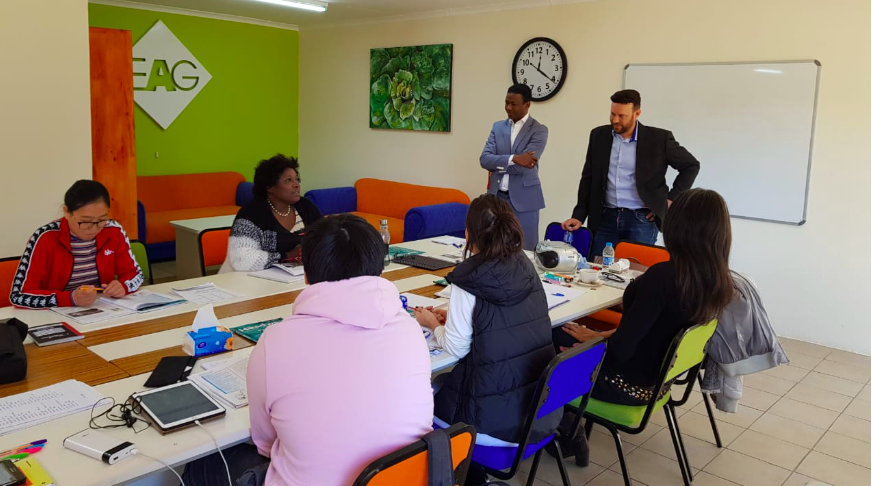
At English Access Gauteng, we see faster progress when students use English outside the classroom in low pressure ways. Real exposure, even for a few minutes a day, builds familiarity and confidence.
If you want a structured but practical way to build this habit, our classroom approach focuses on using English in context rather than memorising isolated rules. You can read more about that here:
👉 https://englishaccess.co.za/the-english-course-thats-so-much-more-than-grammar-and-vocabulary/
2. Repeat before you add something new
Many learners rush ahead too quickly. They move from topic to topic without giving their brain time to absorb what they have already learned.
Repetition does not mean boredom. It means seeing the same idea in different situations. When you encounter the same grammar point in a conversation, a short article, and a quiz, it becomes familiar. That familiarity is what allows you to use English automatically.
Quizzes are especially useful here. They force active recall, which strengthens memory far more than passive reading. If you want a quick example, try one of our grammar quizzes and notice how much you remember the second time around:
👉 https://englishaccess.co.za/pronouns-quiz-test-your-english-grammar-skills/
👉 https://englishaccess.co.za/conjunctions-quiz-test/
3. Speak out loud, even when you are alone
Understanding English silently is not the same as being able to speak it. Speaking uses different parts of the brain, and those parts need practice.
Talking to yourself might feel strange at first, but it is one of the most effective habits you can build. Describe your plans for the day, practise a short introduction, or explain something you know well. When you speak out loud, you train your mouth, ears, and brain to work together.
In our classes, students who speak early and often become more confident faster, even if they make mistakes. Mistakes are part of the learning process, not something to avoid.
If you are curious about what a supportive English classroom should actually feel like, this article explains it well:
👉 https://englishaccess.co.za/english-access-gauteng-classroom-vibe/
Final thoughts
English sticks when it becomes part of your life, not just your study schedule. Small habits done consistently will always outperform big plans that never quite happen.
If you want guidance, structure, and real conversation practice, English Access Gauteng is here to help you build English that lasts.