Why Language and Culture Can’t Be Separated (And Why That’s a Good Thing)
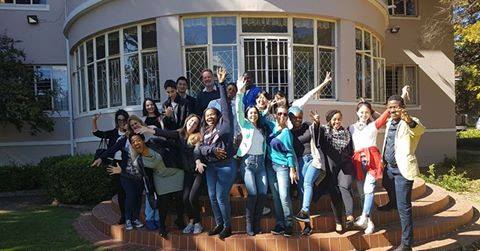
There is a particular energy that arrives when young people step into a new country with open curiosity. You notice it immediately. The smiles come easily. The questions follow quickly. That sense of excitement was unmistakable when a group of high school students from the European section of OASIS College in Réunion Island arrived at English Access Gauteng in Parkmore, Sandton.
They were in Gauteng for a linguistic and cultural experience, taking part in intensive English classes each morning. Beyond the classroom, they were immersed in daily interactions with teachers and fellow students from South Africa and abroad. English was no longer something to memorise. It became something to live.
Sitting down with Emmeline Robert, Océane Robert, Vidot Solenme, Ornella Urbatro, Anthony Techer, and Roberto Laslund, one theme surfaced again and again. Learning felt different here. It felt enjoyable. “It’s been different from home,” they shared together. “Learning has been such fun, especially with the mix of activities we play to learn English.”
Their fondness for their teacher, Bongeka, came up almost instantly. It made sense. Bongeka speaks openly about how much she values teaching students from around the world. For her, language learning is never one-directional. She learns from her students just as much as they learn from her, through stories, cultural habits, and shared laughter that does not always rely on perfect grammar.
In practical terms, the students developed essential communication skills. They learned how to greet others, introduce themselves, ask questions, express gratitude, and navigate everyday situations. More importantly, they learned how to use English socially. The courses balanced oral, reading, and writing skills, but the real focus was confidence. Participation mattered. Curiosity mattered. Being open-minded mattered.
The goal was not only to speak English more fluently, but to connect. To engage collectively. To feel comfortable opening up to people they had never met before. Along the way, the students also found themselves exposed to Afrikaans and German, reinforcing the idea that language learning is never isolated. It exists in layers.
Learning continued well beyond the classroom. The group explored some of Gauteng’s most meaningful cultural and historical landmarks. Visits included the Apartheid Museum at Gold Reef City, which documents South Africa’s twentieth-century history, the Voortrekker Monument, and Lesedi Cultural Village, where traditional dwellings, dance, and storytelling bring Southern African cultures to life.
One highlight stood out clearly. Learning about the life and legacy of Nelson Mandela, and visiting his home, left a lasting impression. History felt personal. Stories became real.
The experience also included a self-defence activity led by one of the teachers and managing director of English Access Gauteng, who is also a skilled martial arts instructor. The session was energetic and engaging, but it carried deeper value. It built self-confidence, awareness, and trust. Skills that extend far beyond language learning.
Most of the students were around fourteen years old, and by the end of the programme, they were already reflecting thoughtfully on their journey. They were eager to complete their travel logbooks, capturing both the preparation before arriving in South Africa and their impressions during the experience itself. These reflections would travel home with them, long after the flight back.
In many ways, the summer camp shaped them into young cultural ambassadors for their island. When asked if they would return to South Africa one day, the response came quickly and unanimously. “Definitely.”
Language and culture are inseparable. When they are experienced together, learning becomes deeper, richer, and far more human. And that is exactly what makes it work.
To explore the cultural side of Gauteng, visit the English Access Gauteng website.
For a full list of English Access Gauteng courses, visit their course page.
English Access Gauteng is a proud member of EduSA, the national association of quality English language centres in South Africa. EduSA members meet guaranteed minimum standards of professionalism and quality, ensuring students receive a trusted and accredited learning experience.