Watch This, Not That: Movies That Actually Help Your English
Watching films in English is often recommended to learners, but not all movies are equally helpful. Some are too fast, some rely heavily on slang, and others jump between accents and timelines so quickly that learners end up reading subtitles instead of listening.
The right film can do the opposite. It can slow your ear down, help you recognise natural sentence patterns, and build confidence with everyday vocabulary. It can also show you how English sounds in real life, not just in a textbook.
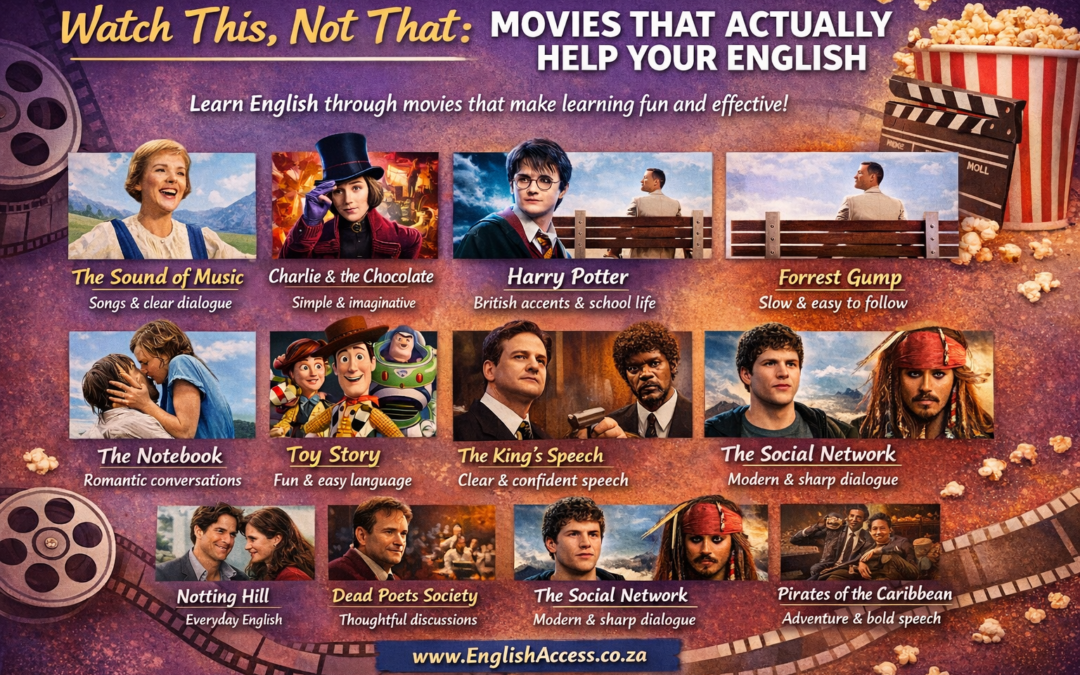
Below is a carefully chosen list of films that actually support English learning. Each one offers clear speech, strong storytelling, and language you can absorb without feeling overwhelmed.
The Sound of Music
This classic is ideal for learners who want clear pronunciation and simple sentence structures. Songs reinforce vocabulary and rhythm, while the dialogue is slow, expressive, and emotionally grounded.
It is especially useful for beginners and intermediate learners who want to train their listening skills without feeling rushed. The formal but friendly tone also introduces polite English and traditional expressions.
Why it works for English learners:
Clear pronunciation, repetition through music, and emotionally driven dialogue that is easy to follow.
Charlie and the Chocolate Factory
This film balances imaginative storytelling with very understandable English. The language is descriptive but not complex, and many conversations revolve around everyday reactions, instructions, and emotions.
Characters speak clearly, and the story is linear, which helps learners stay focused on language rather than trying to keep up with the plot.
Why it works for English learners:
Simple sentence structures, strong visual cues, and playful but accessible vocabulary.
Harry Potter and the Philosopher’s Stone
The first Harry Potter film is a great entry point for learners because the characters are young and speak at a measured pace. Instructions, explanations, and classroom dialogue mirror how English is used in learning environments.
British pronunciation is consistent throughout, which helps learners tune their ear to one accent rather than switching constantly.
Why it works for English learners:
Clear British accents, structured dialogue, and familiar school-based language.
Forrest Gump
Forrest speaks slowly and simply, which makes his dialogue extremely useful for learners. His sentences are short, direct, and emotionally clear, even when the story itself becomes complex.
The contrast between his narration and other characters also helps learners hear differences in tone and pace.
Why it works for English learners:
Slow delivery, simple grammar, and emotionally meaningful repetition.
The Notebook
This film is dialogue-driven and focuses heavily on emotions, relationships, and everyday conversation. The language is natural and conversational without being rushed or slang-heavy.
It is particularly helpful for learners who want to improve their ability to express feelings and understand spoken English in social situations.
Why it works for English learners:
Natural conversational English and clear emotional context.
Toy Story
Animation is often overlooked as a learning tool, but Toy Story is excellent for English learners. The characters speak clearly, jokes are easy to follow, and the vocabulary is practical and repetitive.
Because the story relies heavily on dialogue rather than visuals alone, it encourages active listening.
Why it works for English learners:
Clear speech, everyday vocabulary, and repetition without feeling childish.
The King’s Speech
This is one of the strongest films for learners who want to focus on pronunciation and confidence in speaking. The story itself centres on speech, articulation, and the emotional challenge of communication.
The pacing is slow and deliberate, making it ideal for intermediate to advanced learners.
Why it works for English learners:
Careful pronunciation, formal British English, and a focus on spoken clarity.
Pulp Fiction
This film is not for beginners, but it can be valuable for advanced learners who want exposure to natural, fast-paced conversation. The dialogue reflects real spoken English, including interruptions and informal phrasing.
It works best when watched in short sections with subtitles used selectively.
Why it works for English learners:
Realistic conversational rhythm and exposure to informal spoken English.
Notting Hill
Notting Hill offers clear British and American accents in a relaxed, conversational setting. The humour is language-based rather than visual, which helps learners practise understanding tone and intention.
Dialogue is natural but not overwhelming, making it suitable for intermediate learners.
Why it works for English learners:
Balanced accents, everyday conversation, and clear emotional cues.
Dead Poets Society
This film is rich in spoken English and classroom-style discussion. Teachers and students articulate ideas clearly, often repeating concepts in different ways.
It is particularly useful for learners interested in academic English or expressive speaking.
Why it works for English learners:
Thoughtful dialogue, clear articulation, and structured discussions.
The Social Network
Fast-paced but precise, this film is best suited to advanced learners. The language reflects modern professional and academic English, especially around technology and business.
It helps learners practise following complex conversations at speed.
Why it works for English learners:
Modern vocabulary, professional tone, and realistic academic dialogue.
Pirates of the Caribbean: The Curse of the Black Pearl
This film introduces learners to expressive language, storytelling, and varied speech styles. While some accents are theatrical, key characters speak clearly and with strong emphasis.
It is best for learners who already have a solid foundation in English.
Why it works for English learners:
Expressive speech, memorable phrases, and strong character-driven dialogue.
How to Watch Films to Actually Improve Your English
To get the most value from films:
-
Watch once with subtitles, then again without.
-
Pause and repeat short sentences out loud.
-
Notice how words connect in natural speech.
-
Focus on one accent at a time where possible.
Learning English through film works best when watching becomes active, not background noise.
If you would like structured guidance alongside immersive learning, explore how English Access Gauteng blends classroom learning with real-world English exposure.
👉 https://englishaccess.co.za/
This is really interesting, You’re a very skilled blogger.
I have joined your feed and llook forward to seeking more oof your fantastic post.
Also, I’ve shared your website in my social networks!
My homepage Linktr.ee
Hey very nice blog!
Thanks for the marvelous posting! I certainly enjoyed reading it, you’re a great author.I will remember to bookmark your blog
and may come back later in life. I want to encourage continue your great job, have a nice afternoon!