
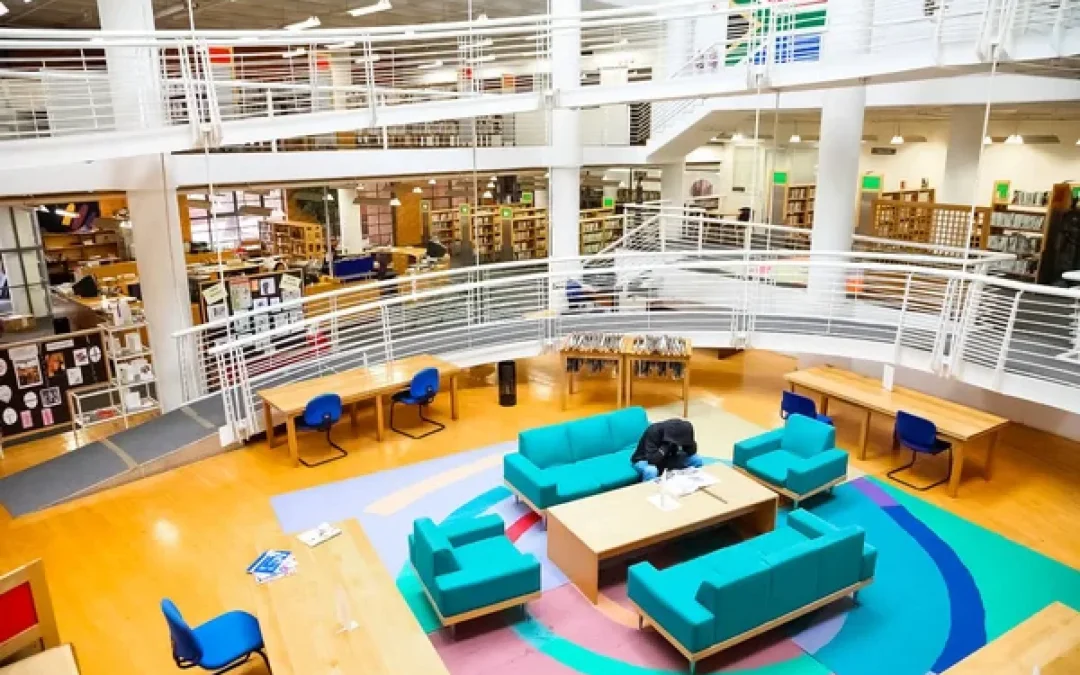
Sandton Library – Angle 2)
Walk into Sandton Library on a weekday afternoon and something feels different.
There is a quiet hum, not silence. Pages turn. Pens move. People sit together, but not distracted. No notifications. No pop ups. Just time, space, and attention.
Learning English without a screen in front of you changes the experience in ways many people forget are possible. It slows things down. It brings language back into the body, the voice, the room. And for many learners, it is where English finally starts to feel real.
Below are the key shifts that happen when learning moves off the screen and into a shared physical space. Each point is followed by why it matters more than we think.
Speaking points for quick reference
-
Focus deepens when the phone is not part of the lesson
-
Conversation becomes more natural and less performative
-
Listening skills sharpen without visual shortcuts
-
Confidence grows faster in real, shared spaces
-
Learning feels human again, not transactional
Focus deepens when the phone is not part of the lesson
Screens train us to skim. Even when intentions are good, the brain expects interruption. A message. A tab. A quick scroll.
In a library setting, that pattern is broken. The environment itself supports concentration. When learners sit with a book, a worksheet, or a conversation partner, their attention stays longer on one thing. Grammar rules are absorbed more fully. Vocabulary sticks because it is not competing with a feed.
This kind of focus is rare. It is also powerful.
Conversation becomes more natural and less performative
Online learning often turns speaking into a performance. Cameras on. Microphones unmuted. A quiet pressure to sound perfect.
In a shared space like Sandton Library, conversation feels lower stakes. Learners speak to be understood, not recorded. They pause. They laugh. They correct themselves without embarrassment. English becomes a tool for connection, not a test.
This is how real communication works outside the classroom. And it is how confidence starts to grow.
Listening skills sharpen without visual shortcuts
Screens provide cues that do the work for us. Captions. Chat boxes. Visual prompts. Helpful, yes, but they soften listening.
Without those aids, learners rely on tone, rhythm, and context. They lean in. They ask follow up questions. They learn to listen for meaning rather than individual words.
This is especially valuable for learners who understand English well on paper but struggle in conversation. Removing the screen trains the ear in a way apps cannot.
Confidence grows faster in real, shared spaces
There is something grounding about learning in a physical place that belongs to the community. Libraries are not classrooms, but they are safe. They carry a quiet permission to try, to learn, to begin again.
When learners practise English in these spaces, the language becomes part of everyday life. Not something separate. Not something only done online at night. It belongs alongside books, study tables, and shared effort.
Confidence grows because English is no longer abstract. It lives in the room.
Learning feels human again, not transactional
Screens are efficient. They are not always relational.
Learning English without a screen brings back the human elements that matter most. Eye contact. Body language. Shared pauses. Real encouragement. These are small things, but they change how learners experience progress.
Language is social. When it is taught and practised socially, it makes sense again.
Why this matters for English learners in Sandton
Sandton is fast. Digital. Always on. That is exactly why spaces like the library matter.
For learners balancing work, study, and daily life, stepping into a screen free environment offers something rare. Presence. Focus. And the chance to practise English the way it is actually used.
At English Access Gauteng, we see this shift often. When learners move between structured lessons and real world spaces like libraries, progress becomes steadier. More confident. More sustainable.
Final thought
Learning English does not always need better technology. Sometimes it needs fewer distractions.
A table. A book. A conversation.
And a space that allows learning to slow down enough to stick.